When you’re discovering how to calm an anxious dog, it’s normal to search for natural relief, and many dog owners have seen courses offering to help solve anxiety instantly with a vagus nerve “reset”.
While the vagus nerve is part of the body’s stress and regulation system, the idea of a quick reset can be misleading. Unfortunately, we can’t magically turn anxiety off, but we can help our anxious dog feel safe and supported.
Calming anxiety in dogs usually works best when owners combine predictable routines, decompression, consent-based touch, appropriate training, and veterinary support when needed.
Understanding Dog Anxiety and Its Root Causes
Understanding Dog Anxiety and Its Root Causes
Dog anxiety can come from many different sources – their genetics, early interactions with the world, pain, sudden routine changes, or big life changes, or it could even be a sign of unmet needs. This anxiety can develop as generalized anxiety, or you may see separation anxiety in dogs.
Many of us recognize the obvious signs of anxiety like pacing, panting, barking, clinginess, trembling/shaking, or destroying things, but anxious dogs might also shut down or freeze.
Common signs of anxiety in dogs
Recognizing both obvious and subtle signs of anxiety can help you support your dog before stress becomes a bigger problem.
Obvious signs:
Pacing or restlessness
Panting when not hot or exercised
Barking, whining, or howling
Trembling or shaking
Destructive chewing or scratching
Clinginess or shadowing behavior
Quieter signs:
Freezing or shutting down
Avoiding people, dogs, or places
Loss of appetite
Difficulty focusing on training
Sudden regression in learned behaviors
Refusing touch, food, or movement in stressful moments
This stress affects the whole body, just it like it does for humans. It impacts heart and breathing rate, digestion, sleep, and things like learning and the ability to make good choices.
The best way you can help when you begin to notice any of these signs is to ask: “What is my dog reacting to, and what do they need to feel safer?” Do not ignore the signs of anxious dog behaviour in hopes that they get better on their own. Anxiety effects can get worse when ignored or if your dog is pushed past their tolerance level too often.
The Vagus Nerve Method for Calming Dogs Naturally
The vagus nerve is a real thing that helps connect the brain and body and plays a role in rest, digestion, heart rate, and stress regulation. So, it’s understandable that it’s talked about when it comes to helping dogs relax. However, a lot of “reset” programs make it sound like anxiety can simply be switched off. Humans also have a vagus nerve, and if it worked that easily, we would all be doing it!
A more accurate way to think about the vagus nerve is this: you are not “resetting” your dog like a device. You are creating conditions where their nervous system has a better chance of moving out of high alert.
That usually means:
Lowering sensory pressure
Giving your dog choice and distance
Using predictable routines
Allowing sniffing, chewing, or gentle movement
Avoiding force, crowding, or corrections
Supporting training with vet care when anxiety is severe
Anxiety tends to grow when a dog is repeatedly pushed past their coping limit. Catching the early signs gives you a chance to reduce pressure before your dog escalates into panic, avoidance, barking, or defensive behavior.
Quick Ways to Calm a Dog Down Instantly
“Instantly” has limits – you might be able to reduce the pressure quickly, but true calm depends on the dog’s emotional state. A good example is quickly returning to a dog who is distressed when separated but it still takes them a time to return to “normal” even after you have reappeared.
Natural anxiety relief for dogs may include sniffing, gentle movement, predictable routines, decompression time, slow breathing from the human, and safe connection. Here are some great ideas to help your dog feel safe:
Move to a quieter space, close blinds, or turn down noise
Use simple familiar patterns rather than asking for a bunch of obedience
Offer sniffing, scatter feeding, a lick mat, a chew, or a food search if the dog can still eat
Use calm movement, such as a slow walk focused on sniffing, instead of forcing stillness
Avoid scolding, corrections, or crowding the dog and remember that these strategies are great management tools but not your full training plan.
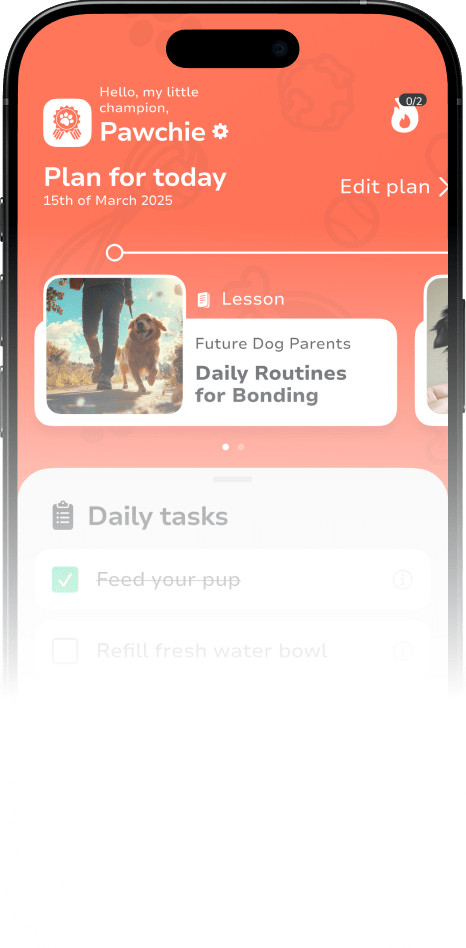
If you know your dog needs a calmer routine but you’re not sure where to start, PawChamp helps you turn these ideas into short, repeatable steps. In the app, you can practice calm routines, decompression, enrichment, and confidence-building without guessing what to do next.
What Can I Give My Dog for Anxiety?
Owners often search for dog calming treats, natural remedies for anxious dogs, or dog anxiety meds because they want fast relief for their dog. Some of these remedies may be helpful, but pay attention to the quality and quantity of helpful ingredients, or you’ll end up with an expensive chicken-flavored treat.
Have a conversation with your vet when adding supplements, especially if your dog is already on medications or has health issues. This is especially important if your dog is young, senior, pregnant, has liver or kidney disease, or already takes medication.
“Natural” does not automatically mean safe, and supplement quality can vary a lot. And if your vet recommends a medication option, explore it. Dog anxiety meds can be safe and helpful when prescribed by a veterinarian.
Medications are not a failure, and you’re not “drugging your dog”. Medication should also be used as part of a training plan and not the only course of action. If your dog struggles to be separated from you for even a minute, a medication option may allow your dog to get into a state where learning to separate is possible without panicking.
Dog anxiety solutions may include management, training, enrichment, predictable routines, behaviour modification, and medication when appropriate.
When to Talk to Your Vet
Anxiety can be behavioral, but it can also be connected to pain or health changes. A vet check is important if your dog’s anxiety is sudden, getting worse, or appears alongside physical signs.
Call your vet if you notice:
Sudden fear or panic with no clear trigger
Changes in appetite, sleep, or energy
Panting, pacing, or restlessness at night
New sensitivity to touch
Limping, stiffness, or reluctance to move
Aggression that appears with anxiety
Separation distress that causes panic, destruction, or injury
Medication is not a failure. For some dogs, it lowers panic enough that training and behavior modification can actually work.
How PawChamp Helps To Calm Your Dog's Vagus Nerve?
Anxious dogs do best with a plan that is calm, repeatable, and realistic for daily life. PawChamp helps you turn anxiety support into small steps you can actually practice: decompression, enrichment, calm routines, confidence-building, and better responses to triggers.
In the app, you can use:
Step-by-step training for anxious or easily overstimulated dogs
Short daily routines that support calm behavior without overwhelming your dog
Progress tracking to notice patterns, triggers, and small improvements over time
Ask a dog expert when you’re unsure whether your dog needs training support, a vet check, or a different plan
PawChamp does not replace veterinary care or a qualified behavior professional for severe anxiety, panic, aggression, or pain. But it can help you stop guessing, stay consistent, and build a calmer routine your dog can understand.
Bottom Line
神経系の「リセット」は、魔法のスイッチのようなものではありません。不安を抱える犬には、安心感、予測可能な日課、ストレス解消、そしてその犬の対処能力の限界を尊重したトレーニングが必要です。最も手っ取り早いサポートは、通常、プレッシャーを軽減することから始まります。つまり、静かな場所、匂いを嗅がせること、穏やかな動き、そして飼い主の落ち着いた振る舞いです。 長期的な改善には、行動修正、環境エンリッチメント、一貫したルーティン、そして必要に応じて獣医師のサポートなどを含む包括的な計画が必要です。